
Internal Transaction Cost
The economic thesis of the Cognitive Enterprise: agents collapse the cost of internal coordination.
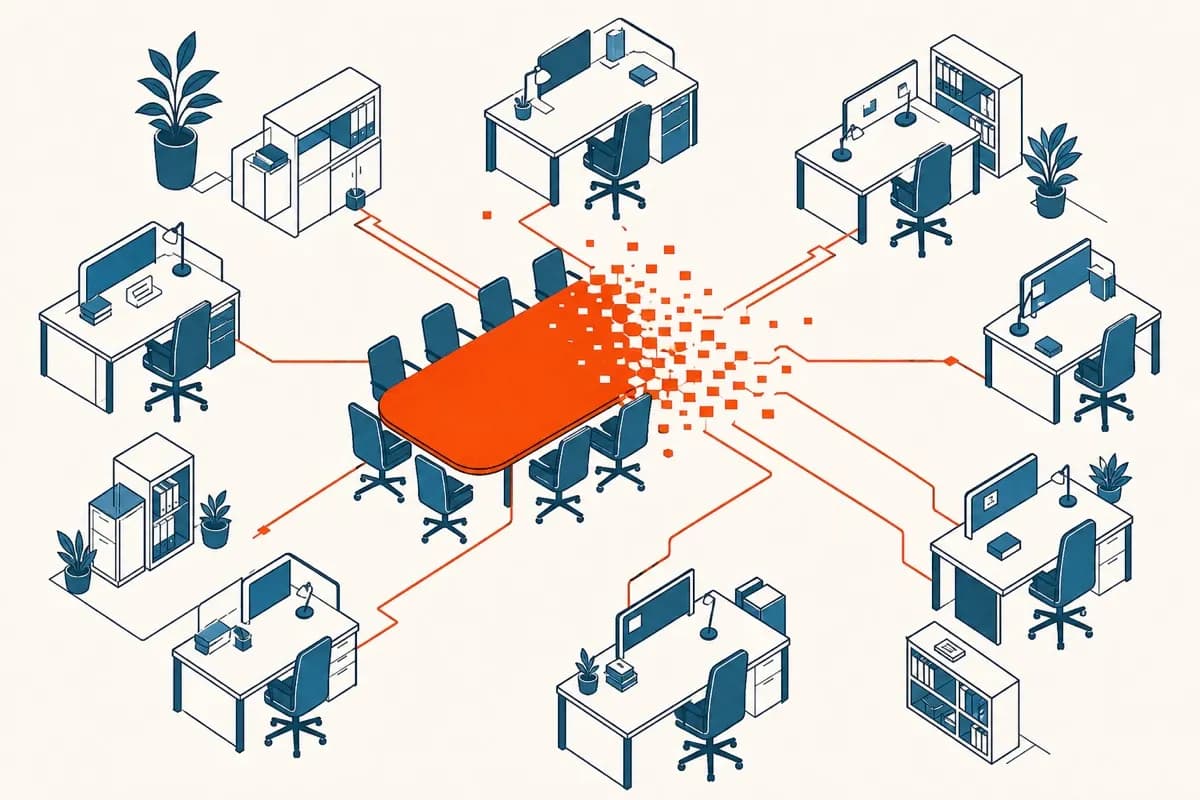
In one sentence
Coase and Williamson’s concept: companies exist because coordinating internally was cheaper than contracting in the market. Agents drive down the cost of internal coordination, and that changes how much headcount and hierarchy are justified. This is the central economic thesis of the Cognitive Enterprise.
Before
Internal coordination is expensive
What it does
Agents drive down the cost of coordination
After
Less hierarchy, more scope per person
Example
Coordinating six volunteers costs meetings, training, queue control, and rework. That is the internal transaction cost, and it never shows up in the spreadsheet. When the agent creates the first draft and the human reviews by exception, much of that cost evaporates.
The question becomes how many layers of coordination are still justified, more than how many volunteers are needed.
The common mistake
Reading Coase as an argument for layoffs. Coase’s thesis is about where the firm’s boundary sits, and headcount is a secondary consequence. What falls is the cost of coordination, and the most common effect in practice is that the organization starts doing things that previously did not fit in the budget.
In practice
- List the process’s recurring meetings and mark the ones that exist only for alignment. Add up the hours per month.
- Redo the calculation six months later. The difference is the value captured, and it is what justifies the next step.
- Watch the side effect: cheap coordination often turns into more scope with the same team.
How to make it tangible
List a process’s meetings, approvals, and handoffs, and mark the ones that exist only to coordinate. Add up the hours per month.
Translated from Portuguese with AI assistance.