
Task
The unit of work that is delegated as a whole. Getting its size wrong is the project’s most expensive mistake.
In one sentence
The smallest unit of work delegated as a whole to an agent: it has a defined input, a verifiable goal, permitted tools, a cost, and a completion criterion.
Before
A process too large to delegate
What it does
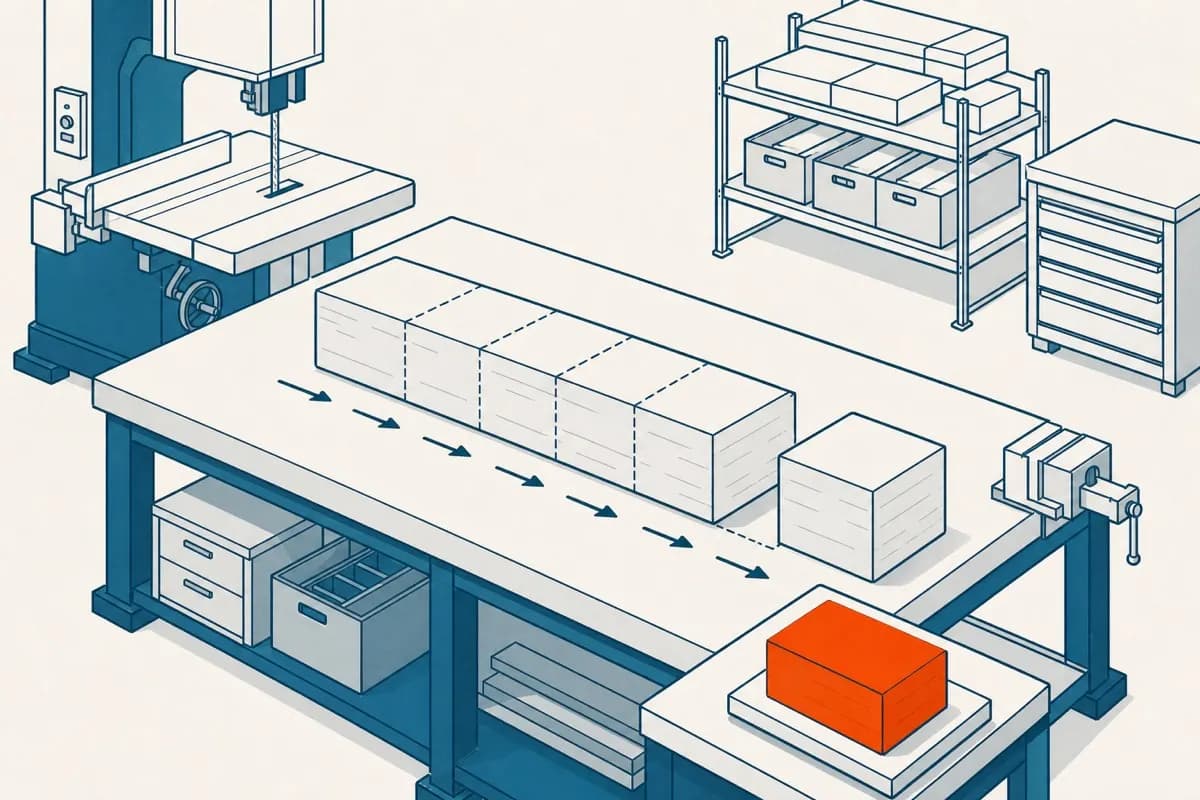
Slice down to the smallest unit with its own criteria
After
Task with input, goal, cost, and endpoint
Analogy
In a kitchen, "dinner" is an outcome, and "chopping the onion" is just a motion. "Preparing the sauce" is the right unit of task: it has a beginning, it has an end, and you can prove whether it turned out well.
Example
In child sponsorship correspondence, three things are often called a task, and only one is:
- "Managing the relationship with the sponsor" is a process. It has no end and no acceptance criteria.
- "Calling the registration API" is a step. It has no goal of its own; it exists inside something else.
- "Writing Ana’s letter based on this year’s report" is a task. Clear input, verifiable goal (the five eval criteria), known cost (R$ 0.71), and a point at which it is done.
The year’s 4,000 letters are not 4,000 different tasks. They are 4,000 executions of the same task, which is why it is worth automating.
The common mistake
Delegating the entire process. "Automate correspondence" is a whole project: the agent spins its wheels because there is no criterion that says when it is done.
The opposite mistake costs just as much: slicing too thin. If every tool call becomes a "task" with its own agent, you have recreated the old flowchart with a coordination cost higher than the human’s.
There is only one test: can you say, without debate, whether this task ended well? If the answer requires a meeting, it is the wrong size. It is either too large to verify or too small to mean anything.
In practice
- A task is described in six fields: named input, verifiable goal, permitted tools, escalation criterion, expected cost, and owner.
- Start with the process and move down until you find the smallest unit that still has its own acceptance criteria. No criteria left? You went too far.
- If two tasks always happen together and are never evaluated separately, they are a single task. Combine them.
- If a task has more than one conflicting success criterion, it is probably two. Separate them.
- The full chain is: outcome (what the company wants) → process (how to get there) → task (delegable unit) → goal (the verifiable instruction within it).
How to make it tangible
One row per task in a table, with the six fields. A typical process becomes 3 to 10 rows. If it became 40, you sliced too thin; if it became 1, you did not slice it.
Note
Task is the unit for almost everything that comes later in this dictionary. The eval measures tasks. Unit economics counts cost per task. The level of autonomy is granted by task, not for the entire company. Human gates sit between tasks, and the orchestrator routes tasks.
That is why it appears early: without this unit defined, half of the concepts that follow have nothing to rest on.
Translated from Portuguese with AI assistance.